Clinical group supervision for therapists and clinicians engaged in complex relational work.
Where clinical thinking, embodied awareness, and the lived experience of practice come together.
A clinically grounded, creative and embodied monthly closed-group supervision program supporting sustainable, reflective practice and high-quality client care.
Whether you work in a large organisation or private practice, you were never meant to carry this work alone. Clinical group supervision at Tempo offers a space to sit with, clarify and make sense of this work in a community of collective care and like-minded peers.
A place to bring clinical material, systemic complexity, and the impact of the work, attending to both the work itself and the clinician within it.
It is a professionally facilitated, closed group that takes a whole-person approach to the clinical role, honouring the intersection of the personal and the professional, and the rich and sometimes uncomfortable territory where they meet.
What makes this group different
Drawing on therapeutic supervision principles, collective care ethics, and creative and embodied process, this group creates the conditions for reflective practice that is honest, rigorous, and sustaining.
The work is structured to attend to multiple layers of clinical practice simultaneously, not just the client or the intervention, but the therapeutic relationship, the clinician's own experience, and the wider system in which the work sits.
The group draws on the Seven-Eyed Model of Supervision as its organising framework, a relational model that structures attention across the full ecology of clinical practice.
This is clinical supervision in its full sense, attending to both the work itself and the impact of that work on the clinician.
What this group offers
Each session is structured to offer space for confidential case discussion, clinical formulation, and decision-making support, developing reflective capacity and practice wisdom, and finding your way through complexity with greater clarity and confidence.
Clinical reflection and case support
Confidential case discussion, clinical formulation, and decision-making support, alongside developing reflective capacity and practice wisdom.
Creative and embodied process
Space to go underneath the clinical thinking, into felt sense, creative process, and embodied reflection, to make sense of the work in different ways. Music, imagery, movement, art, and somatics are woven into the group in clinically grounded and optional ways. Not for performance or expression, but to access what purely cognitive supervision cannot always reach.
Peer thinking and collective support
What participants consistently say is that the most valuable part of these groups is not any single process, but the experience of being genuinely held by a group of peers who get it. The relief of not being alone in this, and the particular kind of thinking that only happens when you are in a room with people who understand the work from the inside.
Collective care in action
There is something that happens in a group of clinicians that cannot happen alone or in individual supervision:
the shared recognition that "it's not just me"
the collective ethics that keep clients at the centre
the practice wisdom that emerges when six practitioners bring different perspectives to a difficult clinical moment
This group is structured around the principles of collective care: support, solidarity and shared accountability that sustain clinicians over time.
We start with a firm scaffold to support familiarity and connection. Through guidance and collaboration over the six months the group also learns to hold the supervision process.
Feeling safe enough to be honest about the work does not come from a policy, a promise or an agreement. It comes from experience of a group that holds what is brought with care.
Safeness (rather than safety) is built through clear and negotiated boundaries, confidentiality held by the whole group, the freedom to share only what feels right and mutual respect and non-judgement.
We welcome challenges and wins in the work; issues that feel big and those that seem small.
Of course what is shared in the group stays in the group. Importantly, the rest is negotiated by participants in the first session and held by the group throughout.
Between sessions - an optional community space
As a new addition to this group, there is a small, private online community hub that sits alongside the supervision sessions.
This is not a clinical or supervision space. It is a place where resources, music, and reflections can live between sessions, supporting connection and continuity without adding pressure or extra work.
This may include relevant articles, short readings, podcasts, and playlists that emerge from the group, a place for informal sharing, and easy access to creative and somatic materials that support the work.
Participation is optional. Some people may contribute regularly, others may simply dip in from time to time - whatever suits you.
Who is clinical group supervision for?
Facilitated by Minky van der Walt, PACFA Accredited Clinical Supervisor.
This group is for therapists, clinicians and service providers doing sustained relational work. Allied health clinicians, medical practitioners, service leaders and therapists are welcome, bringing the full complexity, richness and paradox of this work with them.
This group is suitable for clinicians at all career stages and may contribute to supervision requirements for PACFA, ACA, AMTA, ANZACATA, AASW, and other registration bodies. Please check with your registration body regarding eligibility.
It will resonate most if you:
Are good at what you do
Are aware of the cumulative weight of that work
Are looking for something more than case discussion or collegial support
Want a space where the full complexity of clinical practice, what moves you, what troubles you, what lights you up and what stays with you, can be held with equal seriousness and care
This group welcomes registered and provisionally registered clinicians seeking regular, structured supervision as part of their professional practice
About Minky
Hello and welcome.
I have been sitting in supervision groups, as a supervisee, as a supervisor, and as someone who has thought deeply about what makes them useful, for over 25 years.
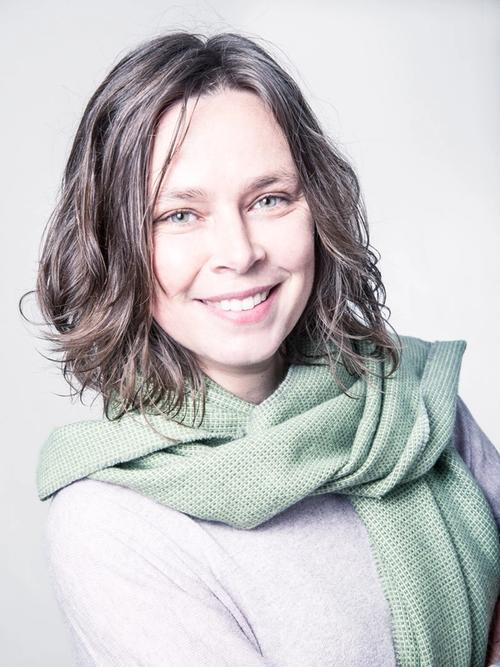
I am Minky van der Walt, PACFA Accredited Clinical Supervisor, Registered Music Therapist, and PACFA Clinical Member. I created these groups because I know from the inside what it is like to do complex relational work without adequate support, and what becomes possible when that support is genuine, collective, and goes beyond case discussion.
As a Registered Music Therapist I bring creative and embodied process into the group not as an add-on, but as a way of reaching beyond talking through symbolism, somatics, sensing and experience.
I bring to this group not just clinical knowledge but a deep belief that being connected to your own humanity as a clinician is not a vulnerability to manage. It is the most important thing you bring to your work.
If this feels like the kind of space you have been looking for, please come and join us.
Fees
Fees are set in keeping with recommendations from Psychotherapy and Counselling Federation of Australia's (PACFA) for 'low-cost supervision'groups: $80 (ex GST)/ hour.
All groups run for 90 minutes and are $120 (ex GST) / group:
$720 (ex GST) for 6 x groups
A $120 (ex GST) non-refundable deposit secures your place in the program with the remaining fee due in full by the first session.
Payment plans are available upon request.
Cancellation
As this is a closed-group program, missed sessions cannot be made up and fees are non-refundable.
I have witnessed the impact of Minky's deeply caring presence in her clinical work.
Minky helps those she works with to feel seen, to feel secure, and to feel safe enough to explore difficult and traumatic experiences.
Leah Crane, Licensed Clinical Psychologist, Certified Consultant & Practitioner in Dyadic Developmental Psychotherapy, The Family Collaborative, New York City